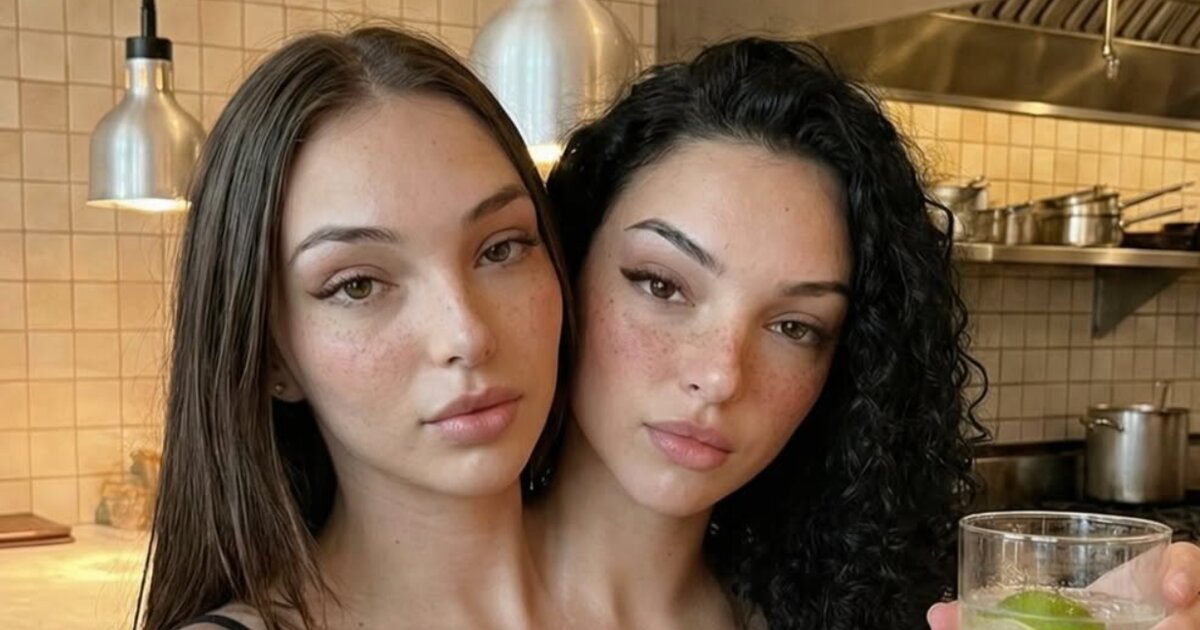
Valeria and Camila are not real. The Instagram account @itsvaleriaandcamila, which claimed to show 25-year-old conjoined twins from Miami, has been confirmed as AI-generated by multiple digital forensics experts. The account gained 280,000+ followers in under two months before being exposed on February 2, 2026. Experts identified telltale signs including perfect symmetry, flawless skin across all images, and anatomically impossible body proportions.
The Story
In December 2025, an Instagram account appeared featuring two women who claimed to be conjoined twins named Valeria and Camila. They said they were 25-year-old accountants living in Miami, sharing a condition called dicephalic parapagus—a rare form where two heads share one torso.
The account exploded in popularity. Bikini photos, fashion content, and intimate Q&A sessions about their dating life attracted hundreds of thousands of followers. By late January 2026, @itsvaleriaandcamila had amassed over 280,000 followers.
How They Were Exposed
Vice magazine published the first debunking report on February 2, 2026. Digital forensics specialists then confirmed the findings across multiple outlets.
Jake Green, a digital forensics expert interviewed by NewsNation, explained the methodology: "We look for freckles. We look for eyelashes, teeth, earrings, hair subtly changing. The absence of these natural imperfections is a red flag."
"These images are clearly AI-generated. The bodies are flawless—the personification of what the media thinks beauty is. There isn't a flaw amongst any of them."— Andrew Hulbert, AI Prompt Engineer, via LADbible
The Telltale Signs
Experts identified multiple markers that proved the images were synthetic:
- Perfect symmetry — Real faces have subtle asymmetries; AI tends toward impossible perfection
- Flawless skin — No freckles, moles, or texture variations across dozens of photos
- Problematic shadows — Lighting inconsistencies that don't match real physics
- Anatomically impossible body — The shared torso "defies biological structure"
- Identical "friends" — Other people in photos showed the same hyper-stylized, flawless appearance
The Denial
When confronted, the account responded defiantly: "We move, we talk, we're obviously not AI." But no video evidence of natural movement or speech was ever provided—only static images and carefully edited clips.
The Motive
Jake Green concluded bluntly: "It's about the money." The account operated a Telegram channel with "spicy" content and was involved in affiliate marketing. AI-generated influencers require no salary, no schedule, and no consent—making them potentially lucrative for whoever controls them.
The Bigger Picture
What separates this case from legitimate AI influencers like Lil Miquela is the lack of disclosure. Many virtual models announce themselves clearly. Valeria and Camila actively denied being AI, exploiting viewer empathy toward people with disabilities.
As AI generation tools improve, distinguishing real from synthetic will become harder. The experts' advice: look for imperfections. Real humans have them. AI struggles to replicate them convincingly.